
Popi's Whales
Rorquals
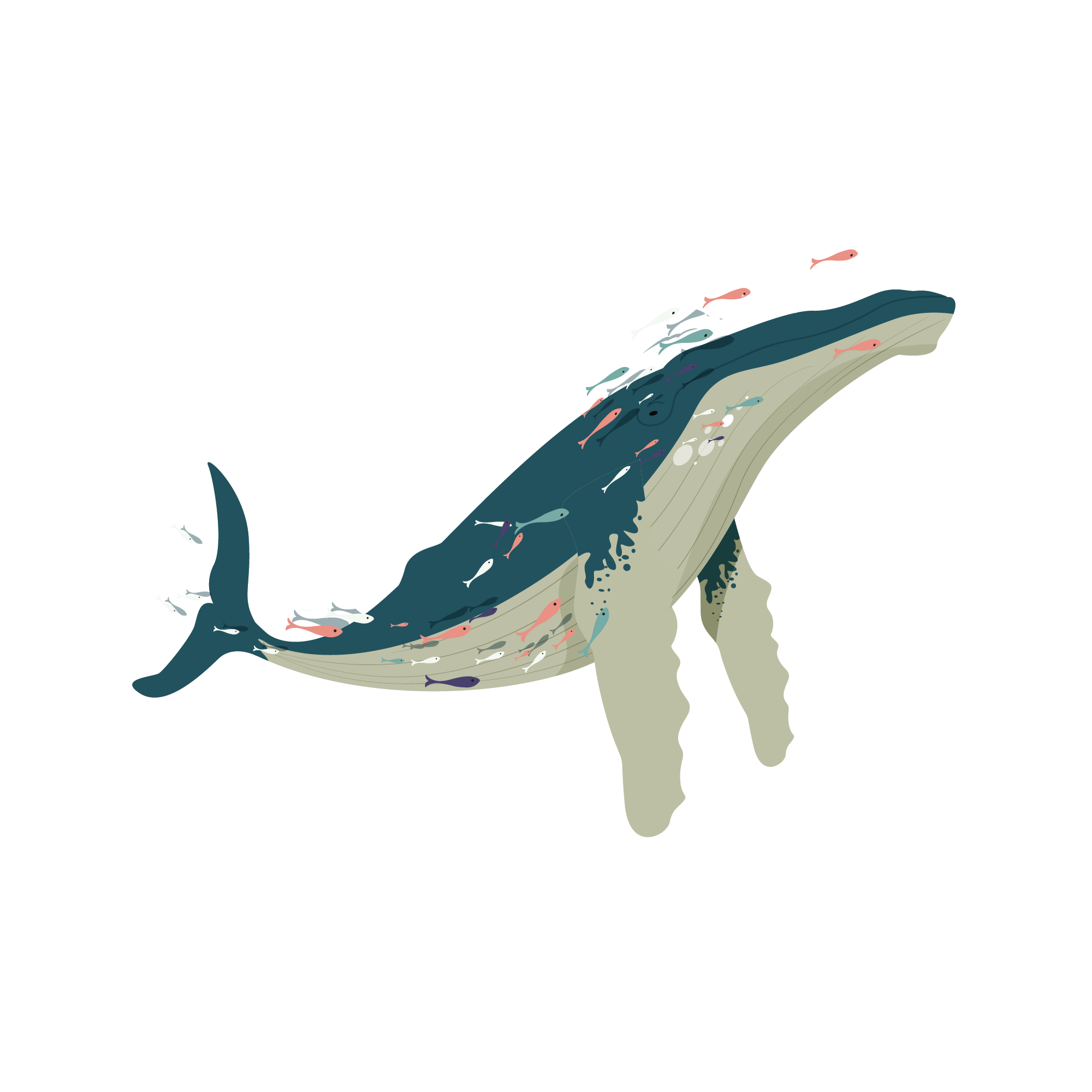
Rorquals are the largest group of baleen whales and all members of this family have a series of folds on their bellies, except for the sei whale and the common minke whale, which have shorter grooves.
Rorquals are slender and streamlined shaped and have narrow, elongated flippers. Their dorsal fin is situated about two-thirds the way back. They feed by gulping in water and pushing it through their baleen plate with their tongue.
Whales in this family are: the blue whale, the fin whale, the sei whale, the Bryde's whale, the minke whale, the humpback whale, ...
Humpback whale
Megaptera noveangliae

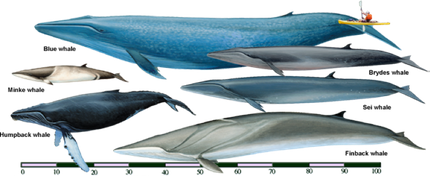
Their latin name means "big wing of New England" referring to their giant pectoral fins, which can grow up to 16 feet long, and their appearance off the coast of New England where European whalers first encountered them.
- Type: Baleen Whale
- Weight: 40 tons
- Size: 14-17m
- Diet: Omnivor
- Conservation status: Least Concern
- Appearance: Dark back, light belly, pleats on throat, small hump in front of their dorsal fins
Humpback whales are known for their long wing-like fins and their songs which can travel for more than 15 thousand kms through the ocean. Their howls are complex and can continue for hours on end and their range of frequencies go from 30 Hz to about 8kHz, which means humans can only hear their songs partly. Whales from the same breeding ground sing in nearly identical tunes and population's songs evolve from year to year into new melodies.
Blue whale
Balaenoptera musculus
Balaenoptera (genus name) means 'winged whale'. Musculus (species name) could mean 'muscle' or 'mouse', which could have been a pun by the Swedish Biologist who named the species. The name blue whale comes from the scandinavian name for the mammal blåhval.
- Type: Baleen Whale
- Weight: 200 tons
- Size: 30m
- Diet: Omnivor
- Conservation status: Endangered
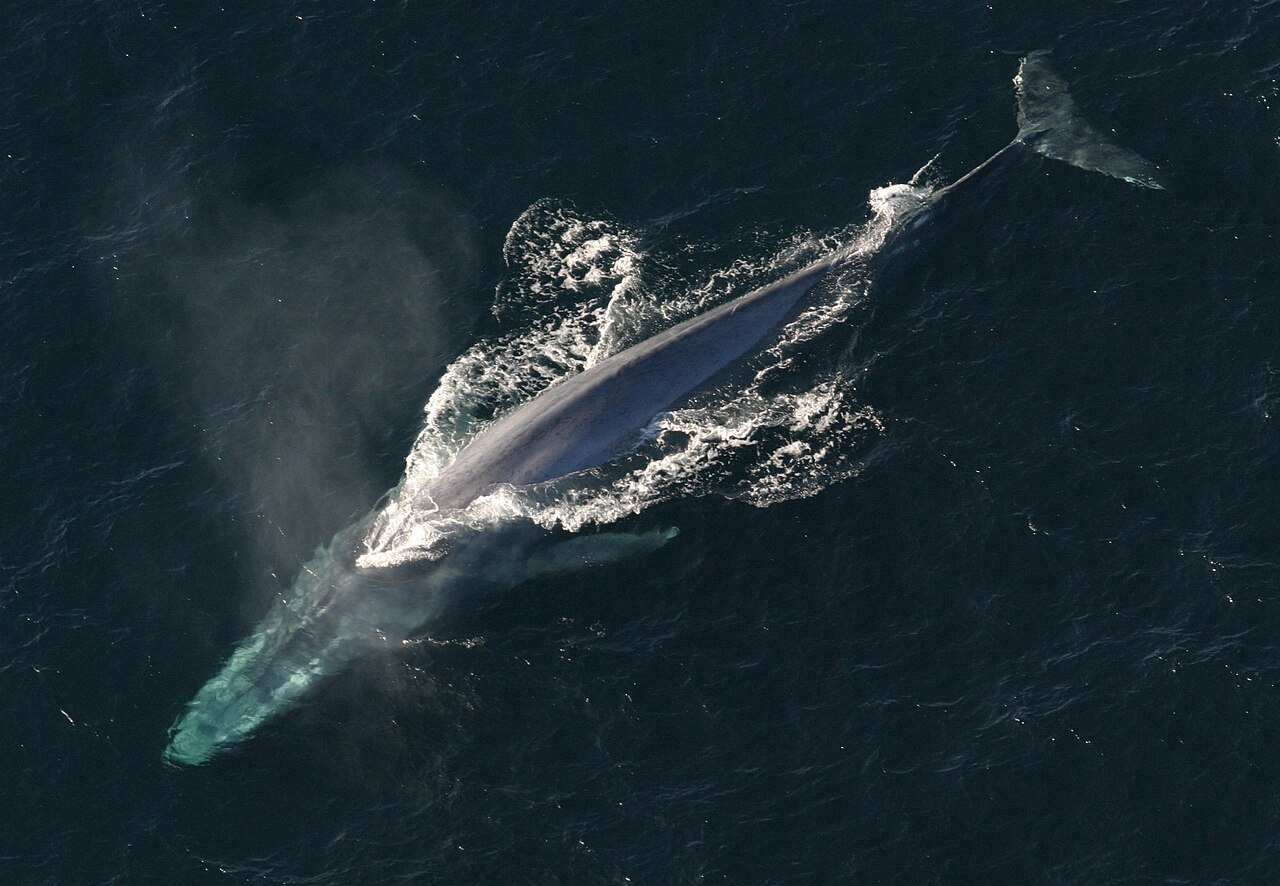
- Appearance: Huge head, heavy mid section, elongated rear body, greyish coloration, wide and triangular fluke
Blue whales have a mottled greyish color that may appear blue beneath the surface. They are the biggest whale to day with some individuals measuring up to 33m. These whales are also known to interbreed with fin whales, the second biggest rorqual. Blue whales where almost hunted to extinction during the 19th century, until all blue whale hunting was banned in 1966. They were listed as endangered as of 2018.
Popi is typing...
sources:
https://www.nationalgeographic.com/animals/mammals/facts/humpback-whale
'Whales, Dolphins and Seals: A field Guide to the Marine Mammals of the World' - Hadoram Shirihai, Brett Jarrett
https://journeynorth.org/tm/hwhale/SingingHumpback.html
https://ocean.si.edu/ocean-life/marine-mammals/whale-earwax-what-you-can-learn-strange-collections
Popi is typing...
- Humpbacks
- Leopard sharks
- Whale Sharks
One of the main differences between toothed and baleen whales is that baleen whales have two blowholes while others like orcas and spermwhales only have one. BUT! their skull actually also has two holes (nasal conducts)! The one that isn't used to inhale & exhale air helps them with echolocation.